What Is Narrative Therapy? Psychologists Explain (And Why It Changes Everything)
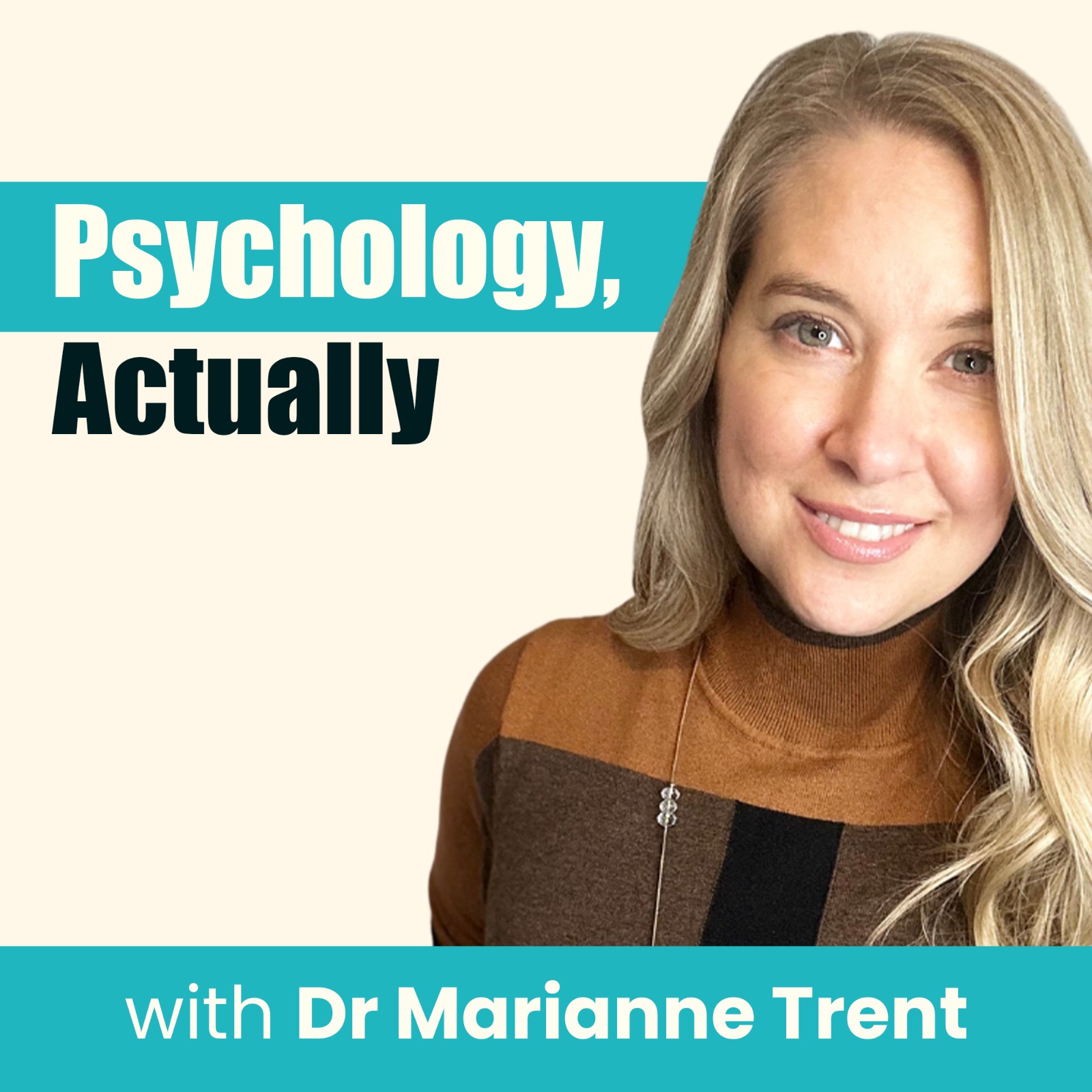
Most therapy tries to understand what’s “wrong” with someone. But what if the person isn’t the problem at all? In this episode of Psychology, Actually, Dr Marianne Trent is joined by clinical psychologists Rosslyn Offord, Elizabeth Field and Polly Kaiser to explore narrative therapy a therapeutic approach that helps people separate themselves from problems, reconnect with identity, and rewrite the stories they hold about themselves.
We discuss trauma, grief, dementia, migration, stigma, ageing, burnout, community work, and how narrative therapy can support people across cultures and across the lifespan. The conversation also explores externalising problems, Tree of Life work, systemic therapy ideas, narrative approaches to dementia care, and how stories can shape both distress and recovery. This episode will be especially valuable for psychologists, therapists, counselling trainees, mental health professionals, systemic practitioners, and anyone curious about identity, therapy, and human stories.
Check out the book, Narrative Therapy and Older People: Challenging Stigma, Supporting Connection and Building Hope https://amzn.to/3PFW8qN
Timestamps
- 00:00 You are not the problem
- 01:00 What is narrative therapy?
- 04:28 How Rosslyn discovered narrative therapy
- 06:18 Narrative therapy in CAMHS and “Sneaky Poo”
- 08:29 Working with dementia and cognitive difficulties
- 11:38 Grief, remembering and storytelling
- 15:29 Why language matters in therapy
- 16:02 Narrative therapy, migration and trauma
- 18:01 Using a person’s own language in therapy
- 19:11 Tree of Life and cross-cultural work
- 20:32 Is narrative therapy evidence-based?
- 24:20 Life story work and dementia care
- 26:35 Is it ever too late to learn narrative therapy?
- 28:39 Dementia stigma and community connection
- 31:29 Who might benefit from narrative therapy?
- 34:27 The new narrative therapy book
- 38:41 Final reflections and resources
#PsychologyActually #NarrativeTherapy #ClinicalPsychology
Links:
📚 📲
🫶 To join my podcast membership to get early access to episodes and / or exclusive weekly content head to: https://the-aspiring-psychologist.captivate.fm/support or to the Apple Podcasts App: https://podcasts.apple.com/gb/podcast/the-aspiring-psychologist-podcast/id1605628278 or to YouTube: https://www.youtube.com/channel/UCOwjrIP_jatiqlAivJE2mgQ/join
📚 To check out The Clinical Psychologist Collective Book: https://amzn.to/3jOplx0
📖 To check out The Aspiring Psychologist Collective Book: https://amzn.to/3CP2N97
💡 To check out or join the aspiring psychologist membership for just £30 per month head to: https://www.aspiring-psychologist.co.uk/membership
🖥️ Check out my short courses for aspiring psychologists and mental health professionals here: https://www.aspiring-psychologist.co.uk/online-courses
Ask Marianne your most pressing psychology career question and she will send you a FREE bespoke reply! Grab your free psychology success guide here and fill in the most pressing concern box: https://www.aspiring-psychologist.co.uk (scroll to the bottom of the page)
✍️ Get your FREE Supervision Shaping Tool now: https://www.aspiring-psychologist.co.uk/free-resources
📱Connect socially with Marianne and check out ways to work with her, including the Aspiring Psychologist Book, Clinical Psychologist book and The Aspiring Psychologist Membership on her Link tree: https://linktr.ee/drmariannetrent
💬 To join my free Facebook group and discuss your thoughts on this episode and more: https://www.facebook.com/groups/aspiringpsychologistcommunity
Like, Comment, Subscribe & get involved:
If you enjoy the podcast, please do subscribe and rate and review episodes.
Hashtags:
#aspiringpsychologist #dclinpsy #psychology #assistantpsychologist #psychologycareers #podcast #psychologypodcast #clinicalpsychologist #mentalhealth #traineeclinicalpsychologist #clinicalpsychology #drmariannetrent #mentalhealthprofessional #gettingqualified #mentalhealthprofessionals #traineepwp #mdt #qualifiedpsychologist #traineepsychologist #aspiringpsychologists #wellbeing
Transcript
Most therapy strives to understand what's wrong with you, but what if you aren't the problem at all? Today, I'm sitting down with three fellow clinical psychologists to explore narrative therapy. It's an approach that does something quite different instead of diagnosing or fixing. It helps people separate themselves from the problem and instead to view their lives as a story that can be rewritten. We talk about grief, dementia, identity, and even a sneaky poo. Yes, a sneaky poo. And we're also talking about why language in therapy might just matter more than you think. Hope you find it so useful. Hi, welcome along to Psychology Actually. We've got a lovely episode today, and we're joined by three guests. It's really lovely to have you here. We're talking about narrative therapy, and before we share who our guests are, I think it can be really helpful to define our terms.
(:Rosalind, could you tell us what narrative therapy is?
Rosslyn Offord (:Yeah, I can certainly give that a go, Marianne. Although one of the things about narrative therapy is the people who initially developed it, which was Michael White and David Epstein back in the '80s based in Australia and New Zealand, as they were very concerned about trying to pin it down or define it too tightly because they have this idea that we should have a spirit of adventure to which lots of people can contribute and so the ideas can evolve and be organic. But I'll give it a go at trying to capture what it is in essence. So it comes out of the systemic therapies that is postmodern in approach. So that means that Michael White, David Epstein, were concerned about an idea of not bringing your own assumptions and your own ideas of what's right or how we should be as people into therapy, but to be listening very carefully and centering the person we're working with and their expertise.
(:So we put to one side our own, we try to avoid getting hypothesising or formulating, which I know is very different from other psychological therapies. But instead of drawing on a whole range of critical theories from coming from psychology and developmental psychology and social psychology and systemic psychotherapy, but also from anthropology, sociology, philosophy, which makes it very lively and interesting approach. But what we're trying to do when we're listening to the person is to understand the stories that have developed about them and their lives in the context they're in, so from their family and their community and the stories that they might have internalised themselves and to be listening out to the ones that seem to be helpful to them and ones that may be less helpful. So quite often people arrive with very problem saturated stories, which have almost become them or how they see themselves and how other people define them.
(:So one of the first things we'd be doing is to try and help the person separate from that. So we use language of externalising the problem and we are very much using their words for that. And then we might be listening very carefully to alternative more helpful stories that are closer to what that person's preferences or hopes for their life might be. And we're trying to draw those out and thicken those stories and make them more accessible than those problems, saturated ones. And there's lots of ideas we use in doing that, which pay attention to things like social discourses. So those like those prescriptions in the world about how one should be, whether that's how you should look as a young man or how you should be as a mother or what ageing well looks like. And we help try and make those visible for people so they can make their own choices about that.
(:Very much working with people in their social context. So narrative therapy had some really interesting practises about working with groups of people and community groups, not just with individuals and families. And it's been developed and evolved throughout across the globe, which makes it a really interesting perspective across culturally. It tries to move away from more traditional Western ideas of the self, for example, and be culturally sensitive to the particular ways of thinking that the person you're working with might have and to understand them. So that's it. I think in a bit of a nutshell, I hope that makes sense. Hopefully as we go along some of the other things we share with you will help illustrate some of those ideas.
Dr Marianne Trent (:It was a great nutshell, Rosslyn. Now we are speaking with you before we go on to have a quick chat with Elizabeth and Polly to find out who they are. Could you tell us a little bit about yourself, Rosslyn, how you got into narrative therapy and what your core profession is?
Rosslyn Offord (:Yes, of course. Yeah. So I work as a clinical psychologist. I work with older people and in particular people living with dementia. But to me, so when I did my clinical training, I was very interested in community and critical psychology. And I struggled to find a therapeutic model that I felt paid sufficient attention to some of those ideas that discussed in critical psychology. And when I came across narrative therapy, I just went to a workshop, one of Michael White's workshops in London about 20 years ago. And it completely, it was like an epiphany for me. I thought, oh, this is what works. This is how I can bring my psychology and think therapeutically about people in ways that praise proper attention to those, all those social and political and cultural factors that we understand interact in terms of contributing to people's distress. So that was my way into it.
(:And then over the years, when I first, I then went into doing some narrative therapy training where I met Elizabeth very early on and the two of us were the only people working with older people at the time. And actually we've only met a few others like Polly along the way. And so the hope for us was actually, how do we get these ideas out there narrative therapies are quite established with other service user groups, but not so much of older people. And we weren't hearing much about older people in narrative therapy or about narrative therapy in the world of older people. So that then has gained momentum for us in terms of coming together with other older adult psychologists and other types of practitioners to try and develop some of these ideas.
Dr Marianne Trent (:Thank you so much. It might surprise you that I first heard of narrative therapy when I was working in a CAMHS service with lots of systemic ideas in it and it was lovely. And that's kind of where I started learning about it and starting to practise some of that. It was Judy Sutton who used to do lots of work around narrative therapy. So it's not just in old article. I love the idea of electing clinicians along the way.
Rosslyn Offord (:No, no, no, absolutely not. No, it's very well established in children's work. And I had come across it actually on a child placement using Sneaky Poo, which is where ... But I didn't know. I knew Sneaky Poop, but I didn't know that that sat in the context of narrative practice or the theoretical roots of that. So that was a discovery I made later. But no, you're right. It's very well used in children's services where it has a good ... Yeah.
Dr Marianne Trent (:Amazing. I feel like we can't ... Sneaky poo does ring a bell, but I feel like we can't give a term like sneaky poo and then not briefly describe what it is. Could you tell us what sneaky poo is roughly?
Rosslyn Offord (:Oh God, well, I think this about 30 years ago when I was working with this. So sneaky poo, that was an approach developed by Michael White for children with anchorprises. So with holding faeces and then would have accidents, which would then ... So that idea of externalising I mentioned was very much this. So the poo would be that's sneaky poo. Sneaky poo has got in and caused this problem. So you'd work with a child and their family around thinking about what sneaky poo looks like. It's a little booklet with pictures of sneaky poo. And you think the things that help sneaky poo and the things the way which you can do as a child to kind of beat sneaky poo. And so that's very classic kind of narrative practise and an idea people might be familiar with. But there's lots of these lovely ideas out there that people don't necessarily ... Like Tree of Life we'll talk about later, but that's also a narrative idea that sits with the people might know in isolation, but not necessarily within that whole wider context.
Dr Marianne Trent (:Thank you so much. I love that explanation. It was really nice to go back down memory lane for me with Sneaky Pooh. Elizabeth, could you tell us a little bit about yourself and how you got into narrative therapy?
Elizabeth Field (:So yes, Marianne, I'm a clinical psychologist working with older people across both dementia and mental health services. I got really attracted to narrative therapy some years ago, hearing Michael White talk about his work with people with learning disabilities, particularly around the way that narrative therapy can adapt to people's cognitive abilities and that the onus is on us as therapists to adapt to the language, to the concepts in ways that people can take part, that kind of scaffolding. And it was really drawn to that because I was working with a number of older people who had various different cognitive impairments or had dementia alongside mental health difficulties. And some of the ... All came from backgrounds where they didn't have the literacy skills to fill in charts about their thoughts they couldn't write. And so I really found narrative therapy was a way that we could work with people's abilities rather than get caught up in what they couldn't do.
(:It also gives you ways and frameworks and skills for working with the context that people are presenting in. So for example, a lot of older people have both internalised and are living in a very ageist society and this narrative therapy gives us ways for thinking about those discourses and how they interact with the problem that somebody's experiencing. And I was very attracted to separating the person from the problem that fits very much with my values. People have problems for all kinds of reasons, and we can think about them both within what's going on in their lives, but also kind of what's going on in society as well. And that really resonated and seemed really relevant to my working with older people, which is why I've kind of kept connected with Roslyn when we met on a training course and carried on those links.
Dr Marianne Trent (:Amazing. Thank you so much, Elizabeth. Yeah, it is really powerful, isn't it? The idea of externalising a person from a problem. And I think especially when we've got families where they are so connected and affected by this. So obviously toileting is a big one with children and young people. But of course, as people age, changes in cognition and whether people start to develop signs of dementia, that really does impact on families as well as the person. So that idea of helping people see the dementia or the cognitive changes as something separate really can be so powerfully important. And it reminds me of when I ... It's Graham Stokes literature, actually, thinking about behaviour that challenges us, not challenging behaviour. So it's not the person, it's the behaviour that's challenging us. And I used to really like his ideas when I was first starting learning about this.
(:And yeah, it's really important stuff, isn't it?
Polly Kaiser (:Yeah.
Dr Marianne Trent (:Thank you so much. Right. Let's hear a little bit from our fourth and final clinical psychologist of the day, last but not least, Polly.
Polly Kaiser (:Hi, it's a real pleasure to be here and share these important ideas about older people, ageing and narrative therapy. So thank you so much for this opportunity. My name's Polly Kaiser. I've retired from the NHS, but I'm still working, running workshops, teaching, writing, and I'm involved with a lived experience group in Greater Manchester called Mature Minds Matters and doing creative projects around poetry and grief with them. So that's what I'm currently doing. I got into the ideas of narrative therapy through some work I was doing on grief with an older woman who had lost her son. Well, she was referred for anxiety.That was the referral. I first see this woman for anxiety. And then we traced it back to the fact that she was anxious. When she was anxious was actually the anniversary of her son's death, age eight. And then we traced ... Actually, he was a twin and the twin had died at birth and this woman had shut her grief in a dark closet, didn't talk about him to the rest of the family, no photos, no nothing.
(:And even though the theory said I should help her say her final goodbye, I couldn't do that, couldn't do that. So my conversations with her were about remembering, talking, and by the end, she had a photo of him on a mantle piece and his siblings could talk about him, and she was incorporated as part of the family. Now, without knowing it, I had done some remembering practises. So when I met Hugh Fox, who supervised me when I was working in Panagare, and he gave me Michael White's seminal book saying hello again, like Rosalyn said with a light bulb, it's like, "Bing, this is it. This is it. I can have this kind of conversation." And I guess I was also influenced by the teaching of John Schotter at university and Ken Gergen, those structuralists and a bit like Rosalyn. I knew that theory and I knew my values, but how do I translate that into therapy speak in the room in front of my client?
(:And so Michael White's suggestions around talking about grief and saying hello. And if the person was here, what would they value? How would they see you? How do you incorporate them? And then Lorraine Heideka's ideas about the origami of remembering really spoke to me about loss and helped me then work alongside older people around loss, not just death, but other losses as well, which is ... Yeah. So
Dr Marianne Trent (:That's kind of what- It sounds like such a wonderful piece of work and really wet your appetite and gave you a thirst for learning more and being even more clinically impactful when you weren't being accidental, when you were being really purposeful about it. Yeah.
Polly Kaiser (:I mean, my husband said, "Oh, why are you doing this course? Because you're already doing it. " But I think it's having that language and having that community and having that community of support and we're all hungry for it. So our connections with Elizabeth and Roslyn, it's like, "Oh, someone else, someone else out there in the book feels like a coming home." It feels like a, "Oh God, I wish I'd had this. " And I'm hoping that this book speaks to clinicians out there a bit like Hugh's article spoke to us because it's full of practical ideas as well and not just about clients, but about working with staff, working in community settings, working creatively. So yeah.
Dr Marianne Trent (:Tell us the name of the book, Polly.
Polly Kaiser (:Hi. Yeah, it's Narrative Therapy and Older People, Challenging Stigma, Supporting Connection and Building Hope. And we'd rather like- Oh,
Dr Marianne Trent (:Lovely. It's very nice, Kava. Okay, thank you. We will talk more about that in a moment, but I'm aware that we are meeting as four white women who all our first languages are English. And we obviously can speak to that being our experience, but how might we be able to support people who might have had different experiences growing up and maybe whose language isn't English using narrative therapy? And I don't know who Fancy is speaking on that point.
Polly Kaiser (:I know Elizabeth and Roslyn have got ideas about this as well, but the one that comes to my mind first was me working with South Asian elder women in Rochdale using Tree of Life and helping to hear their stories of trauma and migration and identity, but in a safe and structured way so that we could look at their values and look at their skills and look at their hopes. And that scaffolded that asset-based conversation about who they were as women and how they had coped and survived with that migration. And it was a really helpful celebration of their stories. It was in the context of doing life story work at the time, but certainly it wasn't a ... Although they talked about traumatic things, it wasn't a traumatic session because it built on their skills and their abilities. So Tree of Life was really helpful.
Dr Marianne Trent (:It reminds me of doing something similar with a couple of clients I've worked with who had come to Britain illegally in essence and had various different roots here and kind of part of their stories about why that had happened to them, who then they did seek asylum and they have indefinite leave to remain now. But it's a real privilege to be able to hear that story and to talk about the sense they've made of that and what contributed to them making those decisions that then ultimately became part of their story. And yeah, like wonderfully, powerfully important work where we help people tell their tale of themselves.
Polly Kaiser (:Yeah. But also making sense of their identities in the here and now and what skills and assets they have and their resilience as well.
Dr Marianne Trent (:Roslyn, would you like to add something?
Rosslyn Offord (:I was just thinking about the importance we put on language and curiosity and narrative therapy. So there are ways to ... We'd be explicitly talking about coming from those different experiences and perspectives and expressing interest in that and inviting people to help us understand. But we also put a lot of emphasis on using the language of the person. And one thing you'd see in narrative therapist doing, which can look quite different to what approaches is constantly taking notes because it's really important to capture those person's words and phrases so that you can be using them back with the person. And we'd often be writing, making documents for people as a way to capture the work we've done. So it's really important we're doing that in that person's language. So a lot of that is really negotiated in a very transparent way. I would say it's kind of fundamental, those ideas of difference and they're not being one way to see the world as so fundamental to the approach that I think it's a really helpful approach to be using with people who speak other languages or with ... There's lots of lovely literature around examples of working through interpreters and so on with narrative therapy.
Dr Marianne Trent (:Thank you so much, Roslyn. Elizabeth.
Elizabeth Field (:Yes, thank you. I just wanted to add that a lot of narrative therapy practises have been developed in lots of different cultures around the world. So there's quite a sharing of that. So particularly David Denbver's work on collective narrative practises covers quite a lot of work that was done in Rwanda, following the genocide there, work in Palestine and all sorts of different cultures. So I think compared to many other therapy models, narrative therapy has been developed and ideas have been shared across quite a very wide variety of different cultures. And particularly, for example, Tree of Life was developed in Southern Africa, and that was using the metaphor of a tree, which is a metaphor that many parts of the world have got trees, so it can kind of be applied in that way. And it's very adaptable to the culture. So the way that you might do celebrations that are part of it, the way that you might draw your trees might look very different depending on what kind of trees you have where you are.
(:So I think that's what's really exciting about narrative therapy is that way that it draws on lots of different cultures and can be applied to lots of different cultures and lots of different groups of people as well.
Dr Marianne Trent (:Thank you so much. I'm just listening to you all speak and I'm thinking if someone's working in a service, maybe in an NHS service and they're having to demonstrate they've got evidence-based practise and following nice guidance, is narrative therapy represented in that way? And is that something that could be argued at supervision? Well, let's do this because actually it's got this really good success rating because people might be like, "Yeah, I'd love that idea, but I need to get the people in my service to agree this is a great idea." Roslyn, have you got any ideas on that
Rosslyn Offord (:One?This is something we have lots of conversations about because we are well aware that we need to be making the case for what we're doing and why. Narrative, as an approach, you can probably hear that it's not an approach you can manualize or run as a typical RCT. So that's in the same way though that systemic approaches would struggle with that. But what we're really interested in is getting that qualitative feedback and ways of evaluating with the people we're working with. And there's some interesting ... We're having conversations about other types of methodologies that might help capture this work and its value. So you won't find it in nice guidance as far as I'm aware, at least of older people you don't. In Wales, we have something called Matrix Cumbri, and it is referenced within that, but in the context of it not having that traditional evidence base.
(:But that was very much the driving force for us writing this book actually was thinking, how do we start sharing all these stories of ways in which we found this to be really helpful? And so our book is written that a lot of the authors are people with lived experience who've received this approach. And I've been saying, there's a lady called Viv who wrote a section of it with me about using this in the context of someone with dementia who's experienced trauma in earlier life. And she was adamant this had to be written to give people hope. She never thought there could be hope. And she's found this approach has worked for her. So she wanted lots of other people to know about it. So that was certainly the motivation, but something we're very much engaging with and thinking about how else do we evaluate this?
(:And because it's very new, psychological therapies with people in dementia and even with older people is still fairly new relative with other client groups. And so that evidence base is still emerging. We're still very much trying to write that. I can see Polly's desperate say something, so I'm going to pass over.
Polly Kaiser (:No, go ahead, Dwayne. I know there's still loads to do on outcomes and we're talking with researchers all the time, but in the context of doing the life story work, which is informed by narrative practise, I remember going to the Dementia Zar and he said, "Oh no, no, you can't introduce it into NHS until you've had an RCT." But actually people themselves liked doing it. They wanted to do it. It became a movement and it became written into commissioning guidance for the dementia commissioning guidance and in other guidance. So that actually it became a custom and practise that people aren't researching, people like Bob Woods and other researchers, but it didn't need that RCT just to get it on the table. And I think narrative therapy generally is in that similar position where people like Viv and Karen and Keith and Chris, the people with lived experience in our book really value it.
(:And I know from commissioners, they really value those stories and those stories speak to the hearts of commissioners as much as our CT trials do. So I would encourage people to really use the power of stories.
Dr Marianne Trent (:Thank you. I love stories and case studies and learning about how things show up for people in real life. And it's reminding me of when I was an assistant psychologist, so quite a while ago now, and I was working in an inpatient setting across three wards and two of the wards had people with dementia diagnoses on them. And what we were finding is that the staff just couldn't really imagine what this person would've been like before. And I know in the literature it was common at that time for people to refer to people with dementia as probably always having been a bit quirky or a bit unusual or that they maybe always liked to walk about a lot or maybe were always a bit jittery or forgetful. And actually when we were doing life story work and we're able to share with the ward staff, actually this person used to work in really high impact industry and had full active lives, loved being a parent, loved being there for you, would remember your birthday all the time and would send you something really special and would bake you these incredible things and love being a grandparent or was an amazing source of support for colleagues and is still spoken about really fondly.
(:It empowered the staff to then, I guess, be able to see that person, not just the diagnosis.
Polly Kaiser (:Sure, sure. And I think dementia is one of those social discourses that we've seen change in our careers, or I certainly have from the cultural discourse was very much long stay, very difficult, very challenging as you brought up the Graham Stokes stuff. And it's gone from that to people like Keith and the dementia diarists and people that Elizabeth works with and can speak to more than I can who've claimed that space living well with dementia. So the narrative and the social construct of dementia is also changing thanks to these dementia activists and the work that people like Elizabeth and Roslyn currently do with people with dementia.
Dr Marianne Trent (:Thank you. And if someone's listening to this or watching this, they could be at any stage of their career, right? So they might be early career, they might be established qualified clinicians already. Is it always okay to start kind of learning about this and bringing this to supervision and to practise with people, would you say?
Polly Kaiser (:Never too late. Never too late to learn.
Dr Marianne Trent (:And never too early maybe as well.
Polly Kaiser (:I'm still learning. I'm still reading. I'm still learning. I was learning about EMDR just before I retired. I'm not practising in it, but I needed to know more about it. And I would encourage other people to buy our book and think and learn and know more about narrative therapy because it also helps mitigate against staff burnout because we all come with values that motivate us to work in the NHS and this approach really fits clinicians' values. I think Elizabeth's got something to say about that or something else anyway.
Elizabeth Field (:Yeah. I was just going to come in there about it's never too early or too late to get into narrative therapy. And I think there's something about how it fits with values. So I think that's something particularly for early career psychologists is about looking at the different types of therapy and thinking what matters to you? What kind of model do you like? What fits to your experience? Because that's some of the evidence base, isn't it? That when therapists use models that feel like a fit for them, then they can be more helpful to people. And I really like that about narrative therapy, that it fit with the values. I like stories and listening to older people talk long before I got into being a psychologist. And I think there are lots of the different approaches. I was going to think about tree of life that particularly helps bring people together, which is another value that's important to me that actually we know that isolation is really important, contributed to mental health difficulties.
(:And so narrative therapy also has collective approaches about bringing people together. So I ran Tree of Life groups for people living with dementia. And what really intrigued me when we brought them together and we heard their individual stories and we heard how they connected. And when I asked them about the storms, the sort of troubles in life that they all talked about the stigma. They talked about how they were spoken to in a different way, how they were stroked and patted in ways that nobody ever did this before. These are people who did a whole range of jobs and backgrounds. Yeah. So they were talking about the ways they were being patronised and treated differently because of their diagnosis, not because not on the basis of what they could and couldn't do and how they could and couldn't contribute. And so that's also why we've also done a lot of projects around the creative arts and bringing in things like poetry.
(:So Asisha Mojaria Kaval did a project where we had took people from our post-diagnostic course, so they just had dementia, they came along to learn about dementia. She got them to read some poetry written by people with dementia and then write their own words, which were then putting together into a collective Group poem. That was then passed to the next course that was run in that town and then their response was then passed to the next course. And so that way you really tackled that stigma. So the people with dementia realised that they were one of not just the eight or 10 on the course, but the sort of 30, 40, 50 as the months went on. And I thought that was a really fabulous way of linking lives. And I know that we've done a number of arts projects around photography, poetry, screenwriting and things like that.
Dr Marianne Trent (:That's wonderful. And so nice to really think actually it's not just me. Other people have this as well. Polly. Yeah.
Polly Kaiser (:Just to say about the poetry with the dementia, we also use poetry as a vehicle with Mature Minds Matters to help reduce stigma again, where they read poems about mental health and they wrote all their own poems that are collected in Rhymes from the Wise and people's voices are on there speaking their poems. So I think in terms of that, and we did outside a witness, a definitional ceremony to capture people's stories, that's a practise we haven't really spoken about, but it's very powerful way to listen to people's stories and have them witnessed. And I think that's another tool to use with commissioners as well to structure storytelling and story listening. Yeah.
Dr Marianne Trent (:Thank you. And obviously if we're thinking about this from a bottom up perspective, so because there isn't like huge amounts of conversations out there at the moment about narrative therapy, we might be attracting people who are thinking, maybe this might work for me to help me work through this problem I'm having or this difficulty or this thing I keep coming up against. And I know it's how long is a piece of string, but if someone is watching or listening for this reason, what might they be struggling with that they could really respond well to? Polly.
Polly Kaiser (:I've got two examples. I'll be quick. Sorry, Liz. One is we had floods a few years ago, boxing day floods. And I worked alongside a woman who was an amazing powerhouse getting flood relief and clearing houses. And I was struggling to write and she was struggling in her marriage at the time. And so I used Tree of Life with her to help her think about her marriage. And she did end up leaving her husband and is now happily remarried, but that was just an everyday incident. I've also used it with my kids and with people that I know just about where are they now in their lives and what are their hopes for the future? And I've used it in myself about where am I and what are my hopes. So I think just as a reflective tool for myself, reflective tools for friends and family, it's been in everyday circumstances, it's been really helpful.
Dr Marianne Trent (:So nice. Thank you, Elizabeth.
Elizabeth Field (:Yeah. We've used Tree of Life and the narrative practises associated with that with assistant psychologists around the time of not getting onto clinical training to really help people think through their values and that, which people have found quite helpful. We've also used it quite a lot at the end of placement, so when undergraduates or nursing students, and that's been great because we've used people living with dementia to come and co-facilitate with us and help students think through what matters to them as they're moving on to qualify or whatever. It can be really helpful from that point of view. I'd also like to recommend Retelling the Stories of Our Lives by David Denbra. That's kind of a book written kind of as a self-help book or for therapists, but it's got a lot of exercises that people might find helpful to kind of, they want to start thinking about narrative therapy in relation to themselves.
(:And I think that's one of its strengths as a therapy is it's really useful for us as therapists to help us stay connected to why we want to do this work. So it's really useful in supervision. It's really useful in staff away days. It's useful in helping staff teams bring together reports to management, as one of our colleagues wrote about in the book. So lots and lots of ways it can be used both for us and for individuals.
Dr Marianne Trent (:Thank you so much. Now let's talk about your book before we finish. Polly, I know you've got a copy in front of you, so why don't you tell us about your book?
Polly Kaiser (:I was really proud and honoured that Rosalyn and Elizabeth invited me to join them on the editorial team for this book. It's a book. I enjoyed writing. I enjoyed the colleagues, the other authors. I've enjoyed learning, relearning. There's really accessible ideas and tools and it's just very, very rich and I think it would help. And it's also got a chapter on ageing as a therapist, which I contributed to at the end with a colleague in New Zealand, Diane. And I think we don't talk enough about ourselves as ageing as retired from the NHS, what's the impact of ageing ourselves? So it's quite a reflective piece. So in terms of what career stage, if people are at end of career stage, I'd invite them to have a look at that. But I think Roslyn, it was the brainchild of Rosalyn. So I'll invite Rosalyn to actually explain it in more detail.
Rosslyn Offord (:I guess because I was in this position that we kind of referred to earlier around feeling I needed to justify why I'm doing the work we're doing, but also feeling very motivated to start thinking, how do we get the word out there more? And so I'd had some conversations with Elizabeth about this and just we got this older adult psychologist who we've met in various narrative therapy trainings together to start thinking through this together. And Polly was kind of an experienced colleague who'd done another book, so it was a good kind of brain to pick from. But it's very much a collaborative ethic. It's very much written, we hope in the spirit of the approach itself so that every chapter is co-written. We have the voices of people with lived experience, as we've mentioned within here too, as well as other practitioners who we've worked with from other disciplines and from the voluntary sectors.
(:So it's very rich in terms of the multiple voices and perspectives. And it takes you through, we start the first couple of chapters are very much introducing and explaining more about what narrative therapy is and some of the theoretical principles and references. But there's then chapters on specific areas like working with loss, like working with trauma being another one about the experience of being a dementia caregivers one. And we move into the lovely chapter out of therapy and into life, which Elizabeth led on, which is more around community-based practises as well as thinking about ageing as therapists. So we try and we hope to capture kind of diversity of ways we can work with narrative therapy. And we've really written it as a way to try and be accessible for anyone. So we hope it will be useful for clinicians with lots of ideas in there and more academic psychologists perhaps, but also for older people themselves to understand.
(:Often older people come with all kinds of stigma about therapy, not necessarily having been exposed to the language of psychology in a way that younger generations have been. And it's also about saying, look, there is hope. There are things that can be different and these are some ideas. So we've written it in a way where there are the technical parts and theoretical parts in there for people who want that, but we've tried to write it in ways that those can also be skipped across for people where that would be less successful or of less interest with lots of stories in there, as Polly said. So that's the hope. We hope it's achieving that for people. But certainly like Polly, it felt really a lovely privilege to write because it's such a collective effort. We had a lovely workshop in Manchester with quite a few of the authors.
(:We had lots of ways of linking in with people as we went along, so it was a lot of fun.
Dr Marianne Trent (:Oh, it sounds amazing. What a great resource. Just remind us of the title there, Roslyn.
Rosslyn Offord (:So I've also got one here to check. It's a long title. So Narrative Therapy and Older People, Challenging Stigma, Supporting Connection and Building Hope.
Dr Marianne Trent (:Thank you so much. And thank you so much for all of your time in speaking with us today. It's such an interesting topic. And I just am really keen for more people to get their ears and their eyes on this and start using this clinically with people to affect really lovely change. Thank you
Rosslyn Offord (:Very much, Marianne.
Polly Kaiser (:Thank you so much.
Dr Marianne Trent (:Thank you so much too. Lovely to have you. Thank you all. Roslyn offered and Polly Kaiser. If you'd like to check out their new book, there are details in the show notes or in the description. I would love to know what this episode has evoked for you. Please do come and let us know on socials where you can tag me. I'm Dr. Marianne Trent Everywhere, or you can comment on YouTube or ask a question or make a comment on Spotify. If you love the show, please do rate and review us on Apple Podcasts. It really does help the show to grow. And as we are newly getting comfortable in our brand new name of Psychology actually, it would be great to get as many new listeners and viewers on this content as possible. Of course, if you've been here a while, you know the content hasn't changed.
(:It's just the name. If you do like hearing about people's stories, especially professional stories, you might well find the Clinical Psychologist Collective book and the Aspiring Psychologist Collective book helpful, which is all about people's experiences, reflections and real life accounts to becoming qualified psychologists. All the books and resources we've mentioned in today's episode on narrative therapy will be featured in the show notes. If you like receiving updates when episodes are available or you just like hearing from me, why not join my mailing list, which you can do by heading to my website, www.aspiring-psychologist.co.uk. If you really like being part of my world, you might well consider the aspiring psychologist membership, or there's our subscriber members only content, podcast episodes called Inner Work. They really are lovely, thoughtful, reflective, like a kind of step behind the curtain on therapy, little bits of my life, my experiences along the years, and I think you'll find it really inspiring.
(:You can join on YouTube directly on Captivate or get a three free day trial on Apple Podcasts. I really do love your ideas for episodes. So if you have got any suggestions for either yourself as a guest or someone you'd like me to chat with or something you'd like me to chat about, please do feel free to pitch me ideas for the show, which you can do by contacting me on socials. LinkedIn is a really easy place to get hold of me. I'm Dr. Marianne Trent there.